
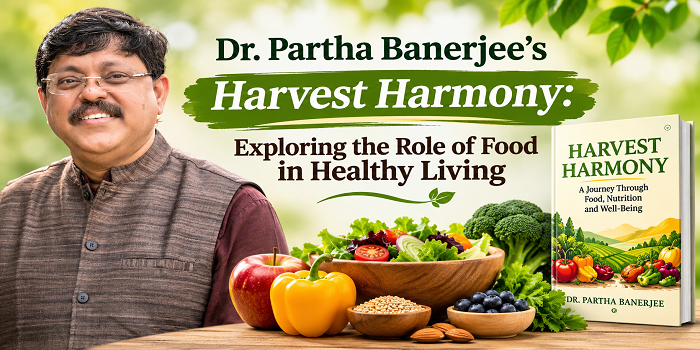
Food is more than just a part of our daily routine. It provides essential nutrients, supports the body’s normal functions, and plays an important role in overall well-being. The choices we make about what we eat can influence our energy, nutritional balance, and long-term health.
In Harvest Harmony, Dr. Partha Protim Banerjee explores the connection between food, nutrition, and healthy living. The book brings attention to mindful food choices, traditional food knowledge, herbs, spices, and the importance of understanding the ingredients that become part of our everyday meals.
With changing lifestyles and increasing interest in nutrition, understanding the relationship between food and wellness has become more important than ever. Through Harvest Harmony, readers are encouraged to look at food more thoughtfully and recognise its place in a balanced lifestyle.
Harvest Harmony: Understanding the Connection Between Food and Wellness
Food choices influence the nutrients our bodies receive every day. A balanced diet containing carbohydrates, proteins, healthy fats, vitamins, minerals and dietary fiber helps support normal bodily functions.
However, healthy eating is not simply about following a particular diet or avoiding certain foods. It is about understanding nutritional needs, choosing a variety of ingredients, and developing sustainable eating habits.
Harvest Harmony explores this relationship between food and well-being. It encourages readers to understand the importance of everyday ingredients and consider how traditional food practices and modern nutritional knowledge can contribute to informed food choices.
The Importance of Mindful Food Choices
The food we consume regularly forms an important part of our lifestyle. Making thoughtful dietary decisions can help us maintain a better nutritional balance.
Here are some important aspects of mindful eating.
1. Understanding Nutritional Value
Different foods provide different nutrients. Fruits and vegetables are sources of vitamins, minerals, and fiber, while pulses, grains, dairy products, nuts, and seeds provide other essential nutrients.
Understanding these differences can help people create meals that offer greater nutritional variety.
2. Including Natural Ingredients in Everyday Meals
Natural ingredients such as fruits, vegetables, grains, herbs, and spices have long been part of traditional cooking practices.
Including a variety of these ingredients can make everyday meals more nutritious and flavourful. Seasonal and locally available foods can also make healthy eating practical.
3. Developing Balanced Eating Habits
A balanced diet does not depend on one special food or ingredient. It involves eating different food groups in suitable proportions according to individual nutritional requirements.
Regular meal planning, adequate hydration, and mindful portion choices can help support a sustainable eating routine.
The Role of Herbs and Spices in Everyday Nutrition
Herbs and spices are an important part of food traditions across different cultures. Ingredients such as turmeric, ginger, garlic, cinnamon, cloves, and coriander are commonly used in Indian kitchens.
Apart from their distinctive flavours, these ingredients contain naturally occurring plant compounds that are being studied for their potential biological properties.
For example:
- Turmeric: Contains curcumin, a plant compound studied for its biological properties.
- Ginger: Commonly used in cooking and traditional food preparations.
- Garlic: Contains sulphur-containing compounds and is widely used in everyday meals.
- Cloves: Contain eugenol and other naturally occurring plant compounds.
- Cinnamon: A popular spice used in sweet and savoury preparations.
These ingredients can add variety to a balanced diet. However, their traditional uses and laboratory research should not be confused with proven medical treatments.
Traditional Food Knowledge and Modern Nutrition
Traditional food knowledge has influenced cooking habits and dietary practices for generations. Different communities have developed ways of preparing food based on locally available ingredients, seasonal changes, and cultural traditions.
Modern nutritional research provides additional information about the nutrients and plant compounds found in these ingredients.
Understanding both perspectives can help people make more informed decisions. Traditional practices can offer useful insights, while scientific research helps evaluate potential benefits, limitations, and safety considerations.
This balanced approach is an important part of understanding food and healthy living.
How Everyday Food Choices Support Healthy Living
Healthy eating is not limited to a particular age group or lifestyle. Everyone can benefit from understanding the importance of nutritional variety and consistent food habits.
Include More Fruits and Vegetables
Fruits and vegetables provide vitamins, minerals, fiber, and other plant compounds. Including different varieties in daily meals can improve dietary diversity.
Choose Whole Grains and Pulses
Whole grains, beans, and lentils are useful sources of dietary fiber and other nutrients. Traditional foods such as dal, whole-wheat roti, and millets can be part of a balanced eating pattern.
Reduce Excessive Salt and Added Sugar
Consuming excessive amounts of salt and added sugar can affect overall dietary quality. Checking food labels and choosing less processed alternatives can help people make better food decisions.
Maintain Healthy Lifestyle Habits
Nutrition is only one part of overall well-being. Regular physical activity, adequate sleep, stress management, and appropriate healthcare are also important.
Small and consistent changes are often more sustainable than following restrictive diets or temporary food trends.
Food and Preventive Health: Understanding the Difference
Nutrition plays an important role in supporting general health and well-being. A balanced dietary pattern can help meet nutritional requirements and may contribute to reducing certain health risks.
However, no individual food, herb, or spice can guarantee protection against every disease.
It is also important to distinguish between food as part of a healthy lifestyle and food as medical treatment. Nutritious meals can complement healthcare, but they cannot replace prescribed medication or professional medical advice.
A responsible approach to nutrition involves understanding the available evidence, recognising individual dietary needs, and consulting qualified healthcare professionals when necessary.
Exploring the Ideas Behind Harvest Harmony
The subject of Harvest Harmony encourages readers to think about their everyday relationship with food.
Some useful questions to consider include:
- Are daily meals providing a variety of essential nutrients?
- How can traditional ingredients be included in modern eating habits?
- Why is it important to understand the nutritional value of food?
- How can herbs and spices add variety to everyday meals?
- What is the relationship between traditional food knowledge and scientific research?
These questions are relevant to anyone interested in nutrition, food traditions, and healthy living.
Through Harvest Harmony, Dr. Partha Banerjee brings attention to the importance of understanding food choices and their connection with everyday wellness.
Conclusion: Making Food Choices a Part of Healthy Living
Healthy living is shaped by everyday habits, and food is one of the most important parts of that journey. Understanding nutritional needs, choosing a variety of ingredients, and developing mindful eating habits can contribute to a balanced lifestyle.
With Harvest Harmony, Dr. Partha Protim Banerjee explores the relationship between food, nutrition, traditional knowledge, and wellness. The subject encourages readers to look beyond routine eating habits and become more aware of the choices they make every day.
Ultimately, healthy eating is not about depending on one ingredient or following every new diet trend. It is about building a balanced, practical, and sustainable relationship with food.
Frequently Asked Questions
1. What is Harvest Harmony by Dr. Partha Banerjee?
Harvest Harmony is a book by Dr. Partha Protim Banerjee that explores the relationship between food, nutrition, and wellness, including mindful food choices, herbs, spices, and traditional food knowledge.
2. What is the main theme of Harvest Harmony?
The central theme is the connection between everyday food choices and healthy living. It encourages readers to understand nutrition and develop a thoughtful approach to eating.
3. Why are mindful food choices important?
Mindful food choices help people pay attention to nutritional value, dietary variety, and eating habits. They can support a balanced approach to everyday nutrition.
4. What role do herbs and spices play in nutrition?
Herbs and spices add flavour and variety to meals and contain naturally occurring plant compounds. Their potential biological properties are being studied, but they should not be treated as substitutes for medical treatment.
5. How can people develop healthier eating habits?
People can begin by including more fruits, vegetables, whole grains, and pulses in their meals, limiting excessive salt and added sugar, drinking adequate water, and maintaining a consistent eating routine.
6. Can healthy food replace medical treatment?
No. A balanced diet can complement medical care, but it cannot replace prescribed medication or professional treatment.
