
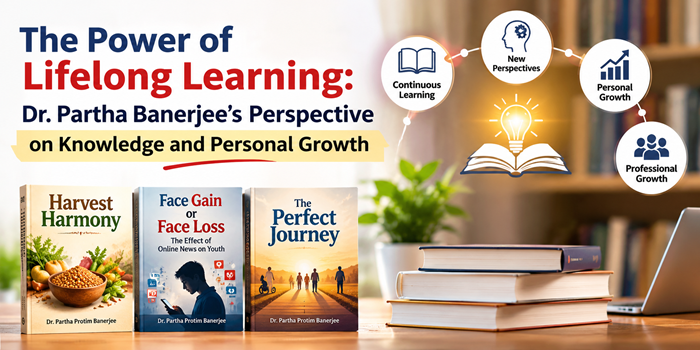
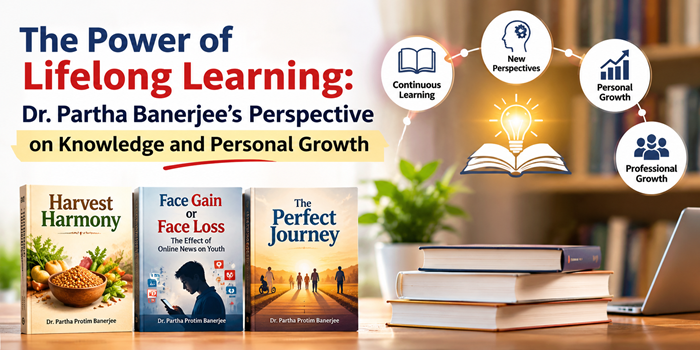
Learning is one of the most valuable parts of human development. It helps people understand the world, explore new ideas and improve the way they approach everyday situations. However, learning does not end with formal education or professional qualifications. It continues through books, experiences, conversations and the willingness to understand different perspectives.
This continuous process is known as lifelong learning. It encourages individuals to remain curious, develop new skills and expand their knowledge throughout life. Whether someone is a student, working professional, entrepreneur or simply interested in personal development, learning can create opportunities for growth at every stage.
The published works of Dr. Partha Protim Banerjee offer readers opportunities to explore different subjects, including healthy living, digital media and social inclusion. His books, Harvest Harmony, Face Gain or Face Loss: The Effect of Online News on Youth and The Perfect Journey, cover distinct areas of knowledge and encourage readers to engage with ideas that are relevant to everyday life.
Exploring these subjects also highlights an important aspect of lifelong learning: knowledge becomes more meaningful when people remain open to new information, examine different viewpoints and apply what they learn.
What Is Lifelong Learning and Why Does It Matter?
Lifelong learning refers to the continuous process of gaining knowledge, developing abilities and improving understanding throughout life. It is not restricted to schools, colleges or universities. People learn through professional experiences, independent reading, online education, personal interests and interactions with others.
For example, a person may learn a new language, explore a subject through books, develop digital skills or understand a different culture. These activities may not lead to a formal qualification, but they can contribute significantly to personal development.
In today’s changing world, lifelong learning has become particularly important. Technology, workplaces and social environments continue to evolve, creating new opportunities as well as challenges. People who remain willing to learn can develop a better understanding of these changes and respond to them more effectively.
Learning Beyond Formal Education
Education provides an important foundation, but knowledge can be developed in many other ways.
- Formal learning: Education through schools, colleges, universities and structured academic programmes.
- Non-formal learning: Workshops, seminars, professional training and online courses.
- Informal learning: Reading, conversations, personal experiences, independent research and everyday observations.
Each form of learning contributes differently. Formal education may provide theoretical knowledge, while practical experiences help people understand how to use that knowledge in real situations.
The willingness to explore all three forms can make learning a continuous part of life.
How Reading and Knowledge Shape Personal Development
Reading is one of the most accessible ways to discover new information and explore unfamiliar subjects. A good book can introduce readers to different experiences, explain complex ideas and encourage them to reconsider existing assumptions.
Books also provide an opportunity to learn at an individual pace. Readers can revisit important ideas, reflect on what they have understood and connect new information with their own experiences.
Developing Critical Thinking
Critical thinking involves examining information carefully, asking questions and considering different viewpoints before reaching a conclusion.
Reading about different subjects can help people develop this ability. Instead of accepting every statement immediately, readers learn to evaluate ideas, compare information and identify the reasoning behind different perspectives.
This is particularly valuable in a digital environment where information is easily accessible but not always accurate.
Building Awareness and Understanding
Knowledge can also increase awareness of subjects that people may not encounter in their everyday lives. Reading about health, society, communication, culture and human relationships can broaden understanding.
It can encourage individuals to become more thoughtful about their choices and more considerate of the experiences of others.
This is one of the reasons reading remains an important part of lifelong learning.
Dr. Partha Banerjee and the Importance of Continuous Learning
Dr. Partha Protim Banerjee is an author whose published books explore different subjects connected with everyday life and society. His publications provide readers with opportunities to engage with topics such as food and healthy living, the influence of online news on young people, and equality and inclusion.
These subjects demonstrate how learning can extend beyond one particular field. Knowledge about health can support informed lifestyle choices, awareness of digital media can encourage responsible information consumption, and understanding equality can help people appreciate different social perspectives.
His books can therefore be explored as part of a wider discussion about the value of reading, knowledge sharing and personal development.
Rather than limiting learning to one subject, readers can benefit from exploring different areas of interest and understanding how they connect with everyday experiences.
Learning Through Books: Exploring the Works of Dr. Partha Banerjee
Books can introduce readers to subjects they may not have considered before. The three published works of Dr. Partha Banerjee explore different themes, offering opportunities to understand health, media awareness and social inclusion.
Harvest Harmony: Learning About Food and Healthy Living
Harvest Harmony explores the relationship between food, nutrition and healthy living. Food is an essential part of everyday life, but understanding its role in well-being involves more than simply choosing what to eat.
Readers can explore the importance of balanced food choices, traditional knowledge, herbs, spices and mindful eating. These subjects encourage a more informed approach to everyday dietary decisions.
The book also provides an opportunity to reflect on how food connects with culture, lifestyle and personal habits. Understanding these connections can help readers become more conscious of their choices and develop an interest in learning more about nutrition.
Face Gain or Face Loss: Understanding Media and Young Minds
Digital media has become a major source of information for young people. Online news, social platforms and digital publications influence how individuals discover events, understand public discussions and form opinions.
Face Gain or Face Loss: The Effect of Online News on Youth explores the relationship between online news and young minds. Its subject highlights the importance of understanding how digital information can influence perceptions and attitudes.
This theme connects closely with lifelong learning because people need more than access to information. They also need the ability to examine sources, recognise misleading content and think critically about what they read.
Media literacy and responsible news consumption are increasingly important skills. Developing them can help young people become more informed and thoughtful participants in the digital world.
The Perfect Journey: Exploring Equality and Inclusion
Understanding people and their experiences is another important part of personal development. Every society includes individuals with different backgrounds, perspectives and circumstances.
The Perfect Journey explores themes of equality and inclusion in the modern workplace. These subjects encourage readers to think about how individuals can be treated fairly and how inclusive environments can support participation and mutual respect.
Learning about equality and inclusion can broaden social awareness. It can also encourage people to consider different viewpoints, communicate respectfully and recognise the importance of creating opportunities for others.
This is an important aspect of lifelong learning because personal development is not only about gaining individual knowledge. It also involves understanding how people interact and contribute to society.
How Lifelong Learning Supports Professional Growth
Continuous learning is valuable not only for personal development but also for professional progress. Modern workplaces frequently experience changes in technology, processes and expectations. Professionals therefore need to update their knowledge and develop skills relevant to their responsibilities.
Developing New Skills
Learning new skills can help individuals become more capable in their chosen fields. Technical abilities, communication, teamwork, leadership and problem-solving are all important in different professional environments.
People can develop these skills through workplace experiences, training programmes, books, mentoring and online education.
For example, a marketing professional may explore new digital tools, while a business owner may study changing customer expectations. Similarly, an employee may improve communication skills to work more effectively with colleagues.
Improving Adaptability
Adaptability means being able to respond constructively when situations change. Professionals who continue learning can become more comfortable with unfamiliar tools, responsibilities and working methods.
Instead of relying only on previous knowledge, they can explore new approaches and identify opportunities to improve their performance.
Strengthening Leadership and Decision-Making
Leadership involves understanding people, evaluating information and making thoughtful decisions. Continuous learning can help professionals develop broader perspectives and improve their approach to workplace challenges.
Reading, listening to others and learning from experience can also support better communication and collaboration.
Practical Ways to Make Lifelong Learning a Daily Habit
Lifelong learning does not require a major change in lifestyle. Small and consistent activities can help people develop a regular learning habit.
1. Read Books Regularly
Reading books is a simple way to explore different subjects. Choose topics that match your interests while occasionally reading about something unfamiliar.
Biographies, educational books, research-based articles and thought-provoking publications can all contribute to learning.
2. Explore Online Courses and Workshops
Online courses, webinars and workshops provide opportunities to develop new knowledge and practical skills. Choose learning programmes that have relevant content and credible instructors.
3. Learn Through Conversations
Discussions with colleagues, friends, mentors and people from different backgrounds can introduce new ideas. Listening carefully to other viewpoints can help improve understanding and communication.
4. Set Small Learning Goals
Set realistic goals, such as reading for a few minutes every day, learning a new skill each month or exploring one unfamiliar subject regularly.
Small steps can make learning easier to maintain over time.
5. Apply What You Learn
Information becomes more useful when it is applied. Try using a new skill, discussing an idea or making a practical change based on what you have learned.
6. Reflect on Your Experiences
Think about what you have learned from everyday situations. Consider what worked, what could be improved and what you would like to understand better.
Reflection helps connect knowledge with practical experience.
Why New Perspectives Matter in a Changing World
Learning about different subjects and experiences can change the way people understand the world. It encourages them to look beyond familiar ideas and consider alternative ways of thinking.
For example, understanding nutrition can influence everyday food choices. Learning about digital media can improve awareness of online information, while exploring equality and inclusion can encourage more thoughtful interactions with others.
These examples show that knowledge is interconnected. Learning in one area can influence decisions and attitudes in another.
New perspectives are particularly valuable in a world where people regularly interact with different cultures, technologies and social environments. Being open to different ideas does not mean accepting every opinion without question. It means being willing to listen, examine information and form informed conclusions.
Overcoming Common Challenges in Lifelong Learning
Although continuous learning offers many benefits, people sometimes struggle to make time for it or maintain motivation.
Lack of Time
Work and personal responsibilities can make it difficult to follow a learning routine. Starting with short sessions, such as reading for 10 to 15 minutes, can make learning more manageable.
Fear of Making Mistakes
Learning unfamiliar subjects can sometimes feel uncomfortable. However, mistakes are a natural part of developing new abilities. Treating them as opportunities to improve can make the process less intimidating.
Information Overload
The internet contains large amounts of information, but not all of it is reliable. Choose credible sources, compare information where necessary and focus on subjects that are relevant to your goals.
Maintaining Motivation
Motivation may change over time. Setting achievable goals, tracking progress and choosing subjects that genuinely interest you can help maintain consistency.
Conclusion: Making Learning a Lifelong Journey
Lifelong learning is an ongoing journey that supports personal development, professional growth and a broader understanding of the world. It encourages people to remain curious, explore new ideas and recognise that knowledge can be gained at every stage of life.
The books of Dr. Partha Banerjee provide readers with opportunities to explore different subjects, from food and healthy living to digital media awareness, equality and inclusion. Each subject offers a different way to understand everyday life and consider new perspectives.
Whether through reading, professional experiences, meaningful conversations or independent exploration, learning can become a valuable part of daily life.
Ultimately, personal and professional growth do not depend only on what people already know. They are also shaped by their willingness to keep learning, question assumptions and remain open to new possibilities.
Frequently Asked Questions About Lifelong Learning and Dr. Partha Banerjee
1. What is lifelong learning?
Lifelong learning is the continuous process of gaining knowledge and developing skills throughout life. It includes formal education, independent reading, professional training and learning through everyday experiences.
2. Why is lifelong learning important?
It helps individuals adapt to changing circumstances, improve their abilities, develop critical thinking and gain a broader understanding of different subjects and perspectives.
3. Who is Dr. Partha Banerjee?
Dr. Partha Protim Banerjee is an author whose published works include Harvest Harmony, Face Gain or Face Loss: The Effect of Online News on Youth and The Perfect Journey.
4. What books has Dr. Partha Banerjee written?
His published books include Harvest Harmony, Face Gain or Face Loss: The Effect of Online News on Youth and The Perfect Journey. They explore subjects including healthy living, online news and youth, and equality and inclusion.
5. What is Harvest Harmony by Dr. Partha Banerjee about?
Harvest Harmony explores food, nutrition and healthy living, including themes related to traditional knowledge, herbs, spices and mindful food choices.
6. What is Face Gain or Face Loss about?
Face Gain or Face Loss: The Effect of Online News on Youth explores the relationship between online news and young people, highlighting the importance of understanding digital information and its influence.
7. What is The Perfect Journey by Dr. Partha Banerjee about?
The Perfect Journey explores equality and inclusion in the modern workplace, encouraging readers to consider fairness, participation and different perspectives.
8. How can reading books support personal growth?
Reading can introduce new ideas, improve understanding, encourage critical thinking and help individuals explore subjects beyond their everyday experiences.
9. How does lifelong learning support professional development?
It helps professionals update their knowledge, develop relevant skills, improve adaptability and prepare for changing workplace expectations.
10. How can someone develop a lifelong learning habit?
Start by reading regularly, setting small learning goals, exploring reliable educational resources, learning from others and applying new knowledge in everyday situations.
