
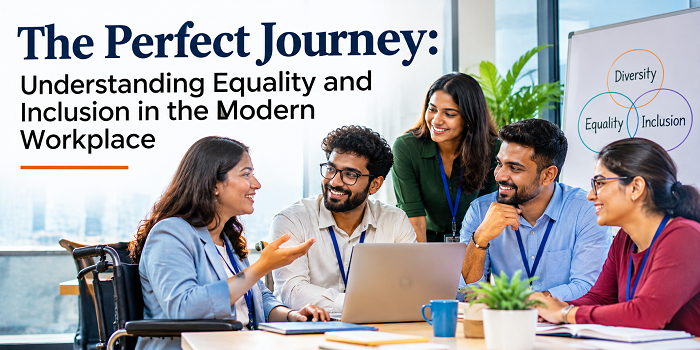
A workplace is more than a place where people complete tasks, attend meetings and work towards business goals. It is an environment where individuals with different backgrounds, experiences, abilities and perspectives come together. For an organization to grow sustainably, employees should have opportunities to contribute, develop their skills and feel respected.
However, not every workplace provides the same experience to every individual. Unfair treatment, workplace bias, limited career opportunities and a lack of respect can affect employee confidence and professional growth. This is why workplace equality and inclusion have become important topics in modern organizational culture.
Building an inclusive workplace is not simply about introducing policies or making public statements. It requires everyday actions, fair decisions and a genuine commitment to treating people with dignity.
The subject also connects with The Perfect Journey, a book by Dr. Partha P. Banerjee that explores corporate intolerance, workplace equality, diversity and inclusion. These themes encourage readers to reflect on how organizations can create healthier and more respectful professional environments.
What Do Workplace Equality and Inclusion Mean?
Workplace equality and inclusion are related concepts, but they do not mean exactly the same thing.
Workplace equality refers to providing fair treatment, equal opportunities and protection from discrimination. It means that decisions about recruitment, compensation, training and career development should be based on relevant criteria rather than personal bias.
Workplace inclusion focuses on creating an environment where people feel respected, welcomed and able to participate. It is about ensuring that employees can express their ideas, contribute to discussions and access opportunities without unnecessary barriers.
Understanding Equality, Equity and Inclusion
These three terms are often used together, but each has a different meaning.
- Equality: Providing people with fair and equal opportunities.
- Equity: Recognising that individuals may face different barriers and providing appropriate support to address them.
- Inclusion: Creating an environment where everyone feels respected, valued and able to participate.
For example, an organization may provide the same training opportunity to every employee. However, some employees may need accessible learning materials or additional support to participate effectively. Recognising these differences is an important part of building an equitable workplace.
Why These Concepts Matter Today
Modern organizations bring together employees with different educational backgrounds, experiences, cultures and professional skills. These differences can contribute to a wider range of ideas and approaches.
However, diversity alone does not guarantee inclusion. Organizations must also ensure that employees are treated fairly and that their contributions are taken seriously.
A workplace where people feel comfortable sharing ideas and raising concerns can support better communication and stronger professional relationships.
Common Challenges to Equality in the Workplace
Workplace inequality does not always appear through obvious discrimination. Sometimes, it develops through everyday practices, assumptions or decisions that create unequal experiences.
Understanding these challenges is the first step towards addressing them.
1. Unfair Treatment and Workplace Bias
Workplace bias occurs when assumptions or personal preferences influence professional decisions. It may affect recruitment, performance reviews, salary discussions, promotions or the allocation of important responsibilities.
For example, a qualified employee may be overlooked for a leadership opportunity because a manager makes assumptions about their background or personal circumstances.
Organizations should establish transparent evaluation processes and ensure that professional decisions are based on relevant skills, performance and experience.
2. Lack of Equal Opportunities
Employees should have fair access to professional development, training, mentoring and career advancement.
When important opportunities are repeatedly offered to only a limited group of people without clear justification, other employees may feel excluded.
Clear promotion criteria, transparent internal hiring processes and accessible learning opportunities can help reduce these barriers.
3. Exclusion and Communication Barriers
Inclusion also depends on how people interact with one another.
An employee may feel excluded when their opinions are regularly ignored, they are interrupted during discussions or they are not included in conversations that affect their work.
Language differences, inaccessible communication methods and workplace cliques can create additional barriers.
Encouraging respectful communication and giving employees meaningful opportunities to participate can help build a more welcoming environment.
Why Diversity and Inclusion Matter in Modern Organizations
A diverse and inclusive workplace can bring different experiences and perspectives into everyday business activities. When organizations manage these differences thoughtfully, they can create an environment where employees have opportunities to contribute and learn from one another.
1. Different Perspectives Encourage Better Thinking
People approach problems differently because of their experiences, education and professional backgrounds.
When employees feel comfortable sharing different viewpoints, teams can examine challenges from more than one perspective. This may help organizations identify alternative solutions and make more considered decisions.
The important point is not simply having a diverse team. Organizations must also create conditions in which different ideas receive fair consideration.
2. Employee Confidence and a Sense of Belonging
People are more likely to participate when they feel respected and believe their contributions matter.
A supportive work environment can encourage employees to ask questions, share suggestions and discuss concerns without unnecessary fear of embarrassment or unfair treatment.
A sense of belonging is built through consistent behaviour, including respectful communication, fair feedback and recognition of individual contributions.
3. Collaboration and Organizational Culture
Workplace inclusion can strengthen relationships between colleagues by encouraging cooperation and mutual respect.
When employees understand that different opinions are welcome, discussions can become more constructive. Teams may also find it easier to address disagreements professionally.
An inclusive culture does not mean everyone must agree. It means people should be able to disagree respectfully while working towards shared objectives.
Practical Ways to Build an Inclusive Workplace
Creating an inclusive workplace requires practical steps that can be followed consistently. Organizations do not always need complicated programmes to begin making improvements.
1. Establish Fair Workplace Policies
Organizations should have clear policies covering recruitment, equal opportunities, discrimination, harassment, compensation and professional development.
Employees should understand these policies and know how to raise concerns when they experience unfair treatment.
Policies should also be reviewed regularly to ensure that they remain relevant and are applied consistently.
2. Encourage Open Communication
Employees should have appropriate opportunities to express their opinions, ask questions and provide feedback.
Managers can encourage open communication by listening carefully, avoiding unnecessary interruptions and responding to concerns professionally.
Anonymous feedback channels may also help employees share sensitive concerns when they are uncomfortable speaking directly.
3. Make Hiring and Promotion Processes Transparent
Recruitment and promotion decisions should be based on clear, job-related criteria.
Organizations can improve fairness by:
- Using consistent interview questions where appropriate.
- Defining skills and qualifications required for each position.
- Applying clear performance evaluation standards.
- Communicating promotion requirements.
- Providing employees with constructive feedback.
Transparent processes can help reduce the influence of personal preferences and unclear expectations.
4. Address Discrimination and Harassment
Every employee should have access to a workplace where discrimination, harassment and disrespectful behaviour are taken seriously.
Organizations should provide clear reporting procedures, handle complaints fairly and protect employees from retaliation for raising genuine concerns.
Managers should also receive appropriate training to recognise and respond to unacceptable workplace behaviour.
5. Support Accessibility and Different Employee Needs
An inclusive workplace considers whether its physical environment, digital tools, communication systems and work arrangements are accessible.
Depending on the role and individual circumstances, reasonable adjustments may help employees participate more effectively.
Accessibility should be considered as part of workplace planning rather than treated as an afterthought.
The Role of Leadership in Workplace Equality
Leaders have an important influence on how workplace values are translated into everyday behaviour.
Employees often observe how managers handle disagreements, distribute responsibilities, respond to complaints and recognise contributions. These actions can communicate whether equality and inclusion are genuinely valued.
Effective leadership involves more than communicating policies. It requires consistent decisions and accountability.
Managers can support workplace equality by:
- Applying professional standards consistently.
- Listening to employees with different perspectives.
- Recognising contributions fairly.
- Addressing inappropriate behaviour.
- Providing transparent feedback.
- Supporting professional development opportunities.
- Taking responsibility when workplace practices create unfair barriers.
Leaders should also be willing to review their own decisions and consider whether unconscious assumptions are influencing the way they manage people.
How Can Organizations Measure Workplace Inclusion?
An organization cannot improve its workplace culture simply by assuming that its policies are working. It needs to understand employees’ actual experiences.
Some practical ways to review progress include:
Employee feedback: Conduct confidential surveys and encourage employees to share their experiences of fairness, communication and belonging.
Promotion patterns: Review whether career advancement opportunities are accessible through transparent and consistent processes.
Training participation: Examine whether employees have fair access to professional development.
Grievance handling: Monitor how workplace complaints are received, investigated and resolved.
Employee retention: Review employee turnover patterns and consider whether particular groups face avoidable barriers.
These measures should be interpreted carefully and with respect for employee privacy. Their purpose is to identify areas for improvement, not to reduce people to statistics.
The Perfect Journey by Dr. Partha P. Banerjee
The relationship between workplace equality, corporate intolerance and organizational culture is explored in The Perfect Journey, a book by Dr. Partha P. Banerjee.
The book addresses themes related to corporate intolerance, diversity, inclusion and fairness in professional environments. These subjects encourage readers to think about the experiences people encounter at work and the importance of creating organizations where individuals are treated with dignity and respect.
Its central subject is relevant to employees, managers, business leaders and anyone interested in understanding workplace relationships.
The broader message is that a positive corporate environment depends on more than business performance. It also involves the way people are treated, the opportunities they receive and the respect they experience during their professional journey.
Readers interested in exploring the book can visit the official page:
Explore The Perfect Journey by Dr. Partha P. Banerjee
Conclusion: Making Inclusion a Shared Responsibility
Workplace equality and inclusion are essential considerations for organizations that want to create fair, respectful and supportive professional environments.
Although leadership and HR teams play important roles, inclusion is not their responsibility alone. Every employee contributes to workplace culture through daily communication, professional behaviour and the way they treat colleagues.
Organizations can make progress by establishing fair policies, improving accessibility, encouraging open communication and providing transparent opportunities for professional development.
The ideas explored in The Perfect Journey by Dr. Partha P. Banerjee offer a relevant starting point for reflecting on corporate intolerance and the importance of equality in professional life.
Ultimately, a better workplace is built through consistent actions. When fairness, respect and inclusion become part of everyday organizational practices, people have a stronger opportunity to contribute, develop and succeed.
Frequently Asked Questions
1. What is workplace equality and inclusion?
Workplace equality means providing fair treatment and opportunities to employees. Inclusion means creating an environment where individuals feel respected, welcomed and able to participate meaningfully.
2. What is the difference between equality, equity and inclusion?
Equality focuses on fair opportunities, equity recognises different needs and barriers, and inclusion ensures that individuals feel valued and able to participate.
3. Why is workplace inclusion important?
Workplace inclusion helps create a respectful environment where employees can share ideas, participate in discussions and access professional opportunities without unnecessary barriers.
4. What are common examples of workplace inequality?
Examples include unfair recruitment decisions, unequal access to promotions, discrimination, inappropriate workplace behaviour, unequal pay for comparable work and exclusion from important discussions.
5. How can organizations create an inclusive workplace?
Organizations can establish fair policies, provide accessible opportunities, encourage open communication, address discrimination and make recruitment and promotion processes transparent.
6. What role do managers play in promoting workplace equality?
Managers help implement workplace policies, provide fair feedback, distribute responsibilities appropriately and address behaviour that creates an unfair or disrespectful environment.
7. How can employees contribute to workplace inclusion?
Employees can listen respectfully, avoid discriminatory behaviour, welcome different viewpoints, communicate professionally and support colleagues when workplace barriers arise.
8. What is The Perfect Journey about?
The Perfect Journey by Dr. Partha P. Banerjee explores subjects related to corporate intolerance, workplace equality, diversity, inclusion and organizational culture.
